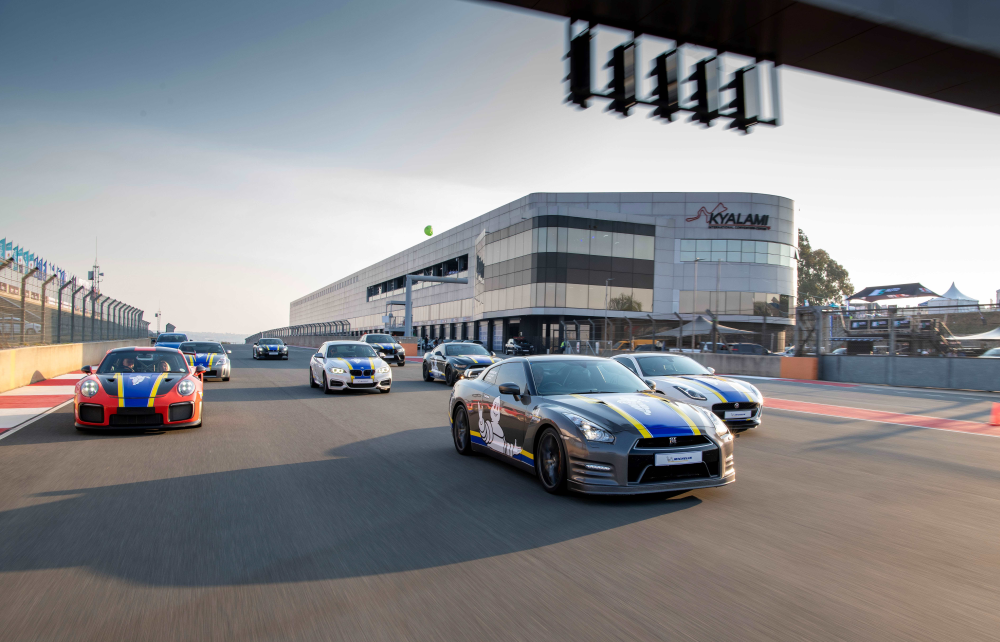
For three days each August, the country’s most famous racetrack becomes the continent’s biggest showroom. As the Festival of Motoring returns to Kyalami for its ninth edition, the real story isn’t just the hot laps and hypercars — it’s what the show floor reveals about who now sells cars in Africa.
There are few better places to take the temperature of South Africa’s car market than the pit straight at Kyalami. From 28 to 30 August 2026, the historic Johannesburg Grand Prix circuit, a name that once hosted Formula 1, hosts the ninth Festival of Motoring, the largest consumer motor show on the continent. Organised by Messe Frankfurt South Africa, it has quietly become the event the industry uses to launch cars, court buyers and, increasingly, to signal where the whole market is heading. What sets the Festival apart from a conventional motor show is that visitors don’t just look, they drive. The format is built around experience: complimentary test drives, a self-driving handling track, and paid hot laps in high-performance. Machinery run through the BMW M, Mercedes-AMG and Volkswagen driving-academy programmes, with instructors from the Simola Hillclimb on hand. Add a dedicated 4×4 village for off-road demonstrations, drifting displays, go-karts, simulators and the Puma Flying Lions aerobatic team overhead, and the show reads less like a dealership and more like a festival for anyone who loves the sound of an engine.
The China question, answered on the show floor
The headline this year is the exhibitor list itself. Around 21 brands are on the grid, and the balance of that roster tells the story of the decade. Alongside the established names South Africans grew up with – Toyota, Volkswagen, BMW, MINI, BMW Motorrad, Mercedes-AMG, Suzuki and Mahindra all sit in the wave of Chinese marques that barely registered a few years ago: Chery, Geely, GWM, Omoda, Jaecoo, BAIC, GAC, Dongfeng, Changan, and newer badges still such as LEPAS, iCAUR and LDV. That is not a quirk of one show; it is the South African market in miniature. Chinese manufacturers have moved from budget challengers to genuine mainstream contenders, competing on technology, warranty and price at a moment when household budgets are stretched and buyers are ruthlessly value-conscious. A visitor walking the halls at Kyalami can, in a single afternoon, compare a legacy German premium SUV against a feature-loaded Chinese rival costing significantly less, the exact decision playing out in showrooms across the country. For anyone tracking the future of the African car market, the Festival’s floor plan is one of the most honest data sets available.

New metal and manufacturer theatre
The show remains a launch pad. Volkswagen is using the 2026 edition for the public South African debut of its new T-Roc, alongside the Tayron, the Amarok Dark Label and other fresh models, the kind of reveal that once belonged to standalone press events but now happens in front of paying enthusiasts. That shift matters: manufacturers have realised that a buyer who has just done a hot lap or sat in a launch car is worth more than a hundred brochures, and they are pouring budget into hospitality suites, track demonstrations and brand activations to prove it. “The 2026 Festival of Motoring reflects the strength and confidence of South Africa’s automotive industry,” said Michael Dehn, managing director of Messe Frankfurt South Africa. Event director Judy Maharaj framed the ambition more broadly: “The Festival of Motoring is more than an event; it is a powerful industry platform where brands, consumers, partners and enthusiasts come together.”
Why it matters beyond the fence
For a Pan-African audience, the Festival is worth watching for reasons that outlast the weekend. South Africa is the continent’s most developed automotive market and its largest vehicle manufacturing hub, so the tastes and trends that surface at Kyalami tend to ripple outward into Namibia, Botswana, Zambia and where many of the same brands and imported units eventually land. The rise of Chinese marques, the growing appetite for double-cab bakkies and 4x4s, the slow arrival of electrified models, and the premium segment’s pivot toward experiential marketing are all continental stories being told, this August, on a single stretch of Johannesburg tarmac.
It is also, simply, a great day out and an increasingly aspirational one. Between the AMG and M hot laps, the premium hospitality, and the supercar presence that now comes as standard, the Festival has grown into a lifestyle occasion as much as a trade showcase, drawing families, collectors and first-time buyers in the same crowd. That breadth is exactly why attendance has climbed year on year, and why the ninth edition arrives with more momentum than any before it.