
In this exclusive interview, Pan-African Voice has the rare privilege of documenting H.E. Ambassador Isaac Moyo at a defining moment in public service, following his December 2025 appointment as Ambassador of the Republic of Zimbabwe to the United Arab Emirates. For a publication committed to profiling the people shaping Africa’s future through leadership, business and institution building, this conversation carries particular weight. Ambassador Moyo is not simply stepping into a new diplomatic post. He is bringing more than four decades of statecraft, foreign service discipline and executive level experience to one of Zimbabwe’s most strategically important international relationships.

Born on 18 May 1958, Ambassador Moyo belongs to a generation of public servants whose careers were built through long years of institutional responsibility rather than public spectacle. Married to Mrs Priscilla Moyo and a father, he presents the image of a man shaped by continuity, duty and personal steadiness. His academic path reflects the same seriousness of purpose. He earned a Bachelor of Arts from the University of Zimbabwe and later a Bachelor of Laws from the University of South Africa, a combination that speaks to both intellectual range and administrative depth. Together, those foundations help explain a career defined by political judgment, legal awareness and a sustained understanding of how states protect their interests at home and abroad.
He joined the President’s Department in Zimbabwe in 1981 as a Foreign Service Officer, beginning a career that would place him at the heart of both diplomacy and executive government. His early international assignments took him to Ethiopia, where he served as First Secretary from 1985 to 1988, before moving to France as Counsellor and then to London in the same capacity.
These postings were not merely titles on a diplomatic record. They formed the practical training ground of a career built across complex political environments, demanding both representation and restraint. He later served in South Africa as Minister Counsellor from 1994 to 1998 and returned as Ambassador from 2014 to 2018, deepening his experience in one of Zimbabwe’s most consequential bilateral relationships.
What makes this appointment especially compelling is the clarity of purpose he brings to it. Ambassador Moyo describes the decision as a profound honour, but his focus is firmly on outcomes. At the centre of his mission is the growth and deepening of bilateral relations between Zimbabwe and the UAE. He sees strong political ties as the foundation on which meaningful economic engagement is built, with the aim of expanding bilateral cooperation, increasing engagement between leaders and ensuring the relationship delivers practical benefits for both nations.
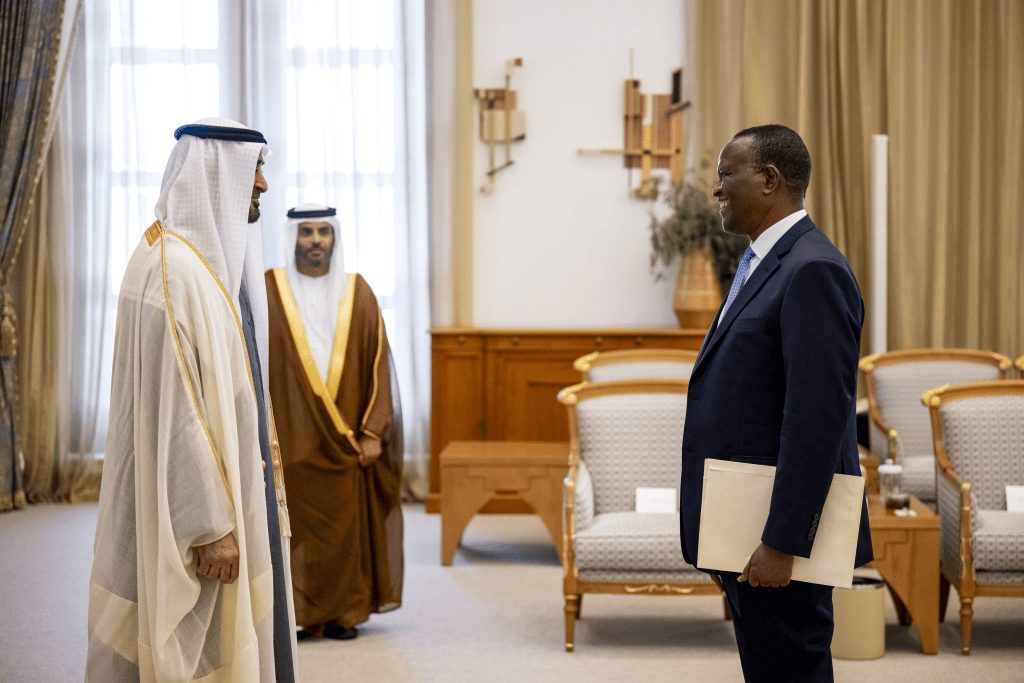
That diplomatic foundation supports three further priorities. The first is trade. While the UAE already stands as Zimbabwe’s biggest trading partner, he is clear that there is room to grow volumes further, with the Embassy ready to support businesses through market information and direct connections across sectors of interest. The second is investment. He intends to position Zimbabwe’s opportunities more assertively across agriculture, mining, renewable energy, infrastructure development and manufacturing, using business diplomacy to attract foreign direct investment on a mutually beneficial basis. The third is tourism. With Zimbabwe’s diverse attractions and distinctive visitor experiences, he wants the Embassy to help position the country as a premier destination for Emirati travellers and visitors from across the wider region.
“Zimbabwe boasts a very strong and highly skilled human capital base, a critical asset that directly drives business performance, profitability and innovation.”
Ambassador Moyo’s significance in this moment lies not only in the depth of his diplomatic service, but in the rare trust he has earned at the core of government leadership. Over the years, he held various senior roles in the President’s Department, including Director Foreign Operations. From 2018 to 2025, he served as Director General in the President’s Office, a position that placed him close to national decision making before his latest appointment to the UAE. That arc matters. It shows a leader who has operated both on the international front line and inside the executive core, understanding diplomacy not as ceremony, but as a serious extension of national strategy.
For our readers, the ambitious professionals, dedicated founders and business leaders, there is a clear lesson in Ambassador Moyo’s journey. Enduring influence is often built quietly through competence, consistency and the ability to earn trust over time. In a world that often celebrates visibility first, his career is a reminder that credibility remains one of the most powerful forms of capital.
Interview: H.E. Isaac Moyo, Ambassador of the Republic of Zimbabwe to the United Arab Emirates.
By: Collins Nyatanga
Location: Embassy of Zimbabwe in Abu Dhabi, UAE
Collins: Ambassador Moyo, thank you for the incredible honour to sit with you today. Let’s start here, when you received the news of your posting, what was the first thing that came to your mind both personally and professionally?
Ambassador Moyo: When I received the announcement of my appointment as Zimbabwe’s new Ambassador to the UAE, I felt greatly honoured and truly privileged to serve my country and its people in the UAE. I knew from the beginning that economic diplomacy would become a major part of my assignment.
Collins: In one sentence, what would you say is the definitive purpose of your mission?
Ambassador Moyo: To maintain, strengthen and deepen bilateral relations between Zimbabwe and the UAE; facilitate and promote trade, investments and tourism as well as protect the interests of Zimbabwean citizens who are living and working in the UAE.
Collins: When you reflect on your career, what part of your upbringing most shaped the way you lead today?
Ambassador Moyo: I grew up in a community and learnt the value of mutual collaboration with others from a very early stage. This helped me greatly to lead in those appointments that I have received from the Government of the Republic of Zimbabwe.
Collins: That’s wonderful, community has indeed shaped a lot of us – as they say “it takes a village” but when you look closer at your life, who has been a defining mentor and what did they teach you about service?
Ambassador Moyo: My defining mentor was my late father. He imparted values of service to the people. He worked for the good of the community throughout his life. He taught me that one should not only work for himself or herself but also for what is good for the community. My father also imparted the values of hard honest work.
Collins: If someone asked you what drives you, what would you say without using the word “diplomacy”?
Ambassador Moyo: Love and pride to serve my country and its people. I love Zimbabwe and I always strive to serve my country to the best of my abilities.
Collins: A lot of people only see the ceremonial side of diplomacy, so I’d love to ask so our readers can better understand, what does being an ambassador actually involve?
Ambassador Moyo: The principal role of an Ambassador is to develop, maintain, foster and strengthen bilateral relations between his or her country and the host nation and ensure that the relations remain positive and peaceful. An Ambassador is also tasked with promoting and safeguarding his own country’s national interests in the host country. These interests could be trade, investments or security. The Ambassador plays a role of diplomatic representation and also the official spokesperson for his or her Government in the host country. Moreover, an Ambassador undertakes public diplomacy initiatives to promote his country’s interests as well as build a positive image of his or her country in the host country. Finally, an Ambassador is tasked with protecting the interests of his or her country’s citizens who will be living and working in the host country.
Collins: Given the broad responsibilities of an ambassador, from strengthening bilateral relations to promoting trade, investment, and protecting citizens – what are your top priorities in your first 90 days in the UAE?
Ambassador Moyo: My top priority is to engage the UAE Government with a view to strengthen and deepen the bilateral relations between Zimbabwe and the UAE. I will also prioritize engaging in activities that help the UAE Government and business entities to understand Zimbabwe’s trade and investment opportunities as well as Zimbabwe’s tourism potential. Zimbabwe is endowed with vast natural resources and tourism attractions which the two countries can exploit for their mutual benefit. My other major priority is to engage and facilitate potential investors in the UAE to invest in Zimbabwe. The Embassy will intensify engagements with the business sector in the UAE with a view to identify markets for Zimbabwe’s exporters.
Collins: Thank you for sharing that. We can already see the positive signs of the work taking shape. In your view, what are some achievements you are most proud of so far?”
Ambassador Moyo: Since my arrival in Abu Dhabi in early December 2025, I have so far managed to establish contacts with UAE Government officials especially in the Ministry of Foreign Affairs. These contacts will help me to advance Zimbabwe’s national interests in the UAE. I have also engaged business entities in the UAE and made them aware of Zimbabwe’s investment potential and the friendly investment policies and incentives offered by the Government of the Republic of Zimbabwe. I have also acquired a greater understanding of the UAE business environment and opportunities that Zimbabwean businesses can exploit. The Embassy also facilitated the successful participation of Zimbabwe and its leadership, H.E. President E.D. Mnangagwa, at the World Government Summit in Dubai from 3 to 5 February 2026.
Collins: It’s encouraging to hear about the early progress. Looking ahead over the next 12 months, what would success ideally look like for you and your office?
Ambassador Moyo: By the end of my first year in the UAE, success will be judged by the broadening and deepening of bilateral relations between Zimbabwe and the UAE as well as increased trade, economic and investment exchanges between the two countries. The growth in the volume of fresh produce exports to the UAE will also mark an important success. Making Zimbabwean companies understand and appreciate the abundant trade opportunities that the UAE offers will constitute success.
Collins: Let’s explore how that success can be delivered and where Zimbabweans can get involved. What areas does Zimbabwe have strong and ready to work partnerships with UAE?
Ambassador Moyo: The UAE is already Zimbabwe’s biggest trading partner and efforts continue to be made to continue growing the volumes of trade. The Embassy stands ready to facilitate UAE businesses interested in doing business in Zimbabwe and promote Zimbabwe’s investment opportunities. These areas are in renewable energy development; agriculture and food security; mining; infrastructure development, trade logistics, tourism and digital transformation and artificial intelligence.
Collins: It’s evident that there are strong opportunities for deeper trade and investment with Zimbabwe. From your perspective, what should UAE investors understand about Zimbabwe’s potential and value as an investment destination?
Ambassador Moyo: First and foremost, I want UAE investors to understand that Zimbabwe is Open for Business and is actively implementing measures to improve the ease of doing business. Secondly, Zimbabwe has vast abundant resources and investment opportunities in various areas such as agriculture, mining, tourism, manufacturing and services. I also want UAE investors to know that Zimbabwe has a Bilateral Investment Promotion and Protection Agreements (BIPPAs) with the UAE. Zimbabwe anticipates the signing of more bilateral agreements in the economic field in the near future. I would also like UAE investors to know that Zimbabwe enjoys immense political stability and is very safe. Moreover, I want UAE investors to know that Zimbabwe boasts a very strong and highly skilled human capital base, a critical asset that directly drives business performance, profitability and innovation. Lastly, I would like UAE potential investors to know that due to its central location in Southern Africa, Zimbabwe is a central hub for business in the Southern Africa region, serving as a gateway to 14 SADC countries.
Collins: Very often, the strength of bilateral relations is not built by policy alone, but also through people – through diaspora communities, cultural exchange, and the relationships formed between citizens. How is the Embassy harnessing diaspora networks and people-to-people exchanges to support Zimbabwe’s national priorities and deepen international partnerships?
Ambassador Moyo: The Embassy fully understands that the Zimbabwe diaspora in the UAE contributes immensely to the economic development of Zimbabwe. In view of this, the Embassy treats the diaspora as strategic partners for the development of Zimbabwe and often shares information with the diaspora about the economic opportunities back home. Lastly, the Zimbabwe diaspora also promotes Zimbabwe’s positive image and culture.
Collins: Your reflections on the diaspora really highlight he power of people in advancing a nation’s image, progress, and future. And when young people look at your own journey, serving in key leadership positions and representing Zimbabwe across major international postings; it is deeply inspiring. So what advice would you give to young people who want to follow a path in public service or diplomacy?
Ambassador Moyo: Young people who want to join public service or diplomacy must understand that public service requires great patriotism, personal sacrifice, hard work and intense personal commitment. Public service also requires one to love his or her country.
Collins: Mr Ambassador, as we come to a close, let me ask you one final question: in a few words, how would you describe the future of relations between Zimbabwe and the UAE?
Ambassador Moyo: The future of Zimbabwe-UAE relations should be characterized by excellent bilateral and diplomatic relations; enhanced economic cooperation and trade, and enhanced tourism exchanges between the two countries.


Discover more from Pan-African Voice
Subscribe to get the latest posts sent to your email.


