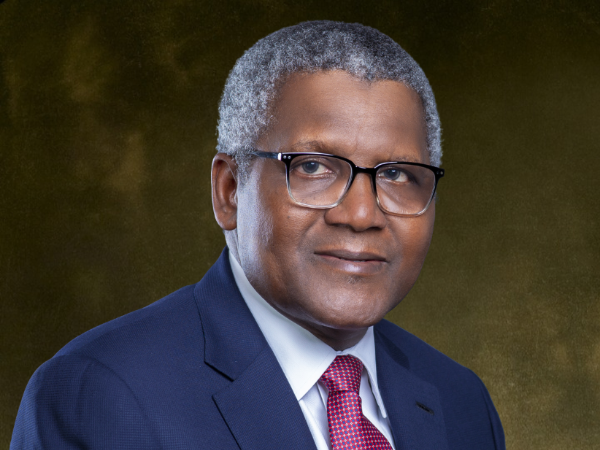
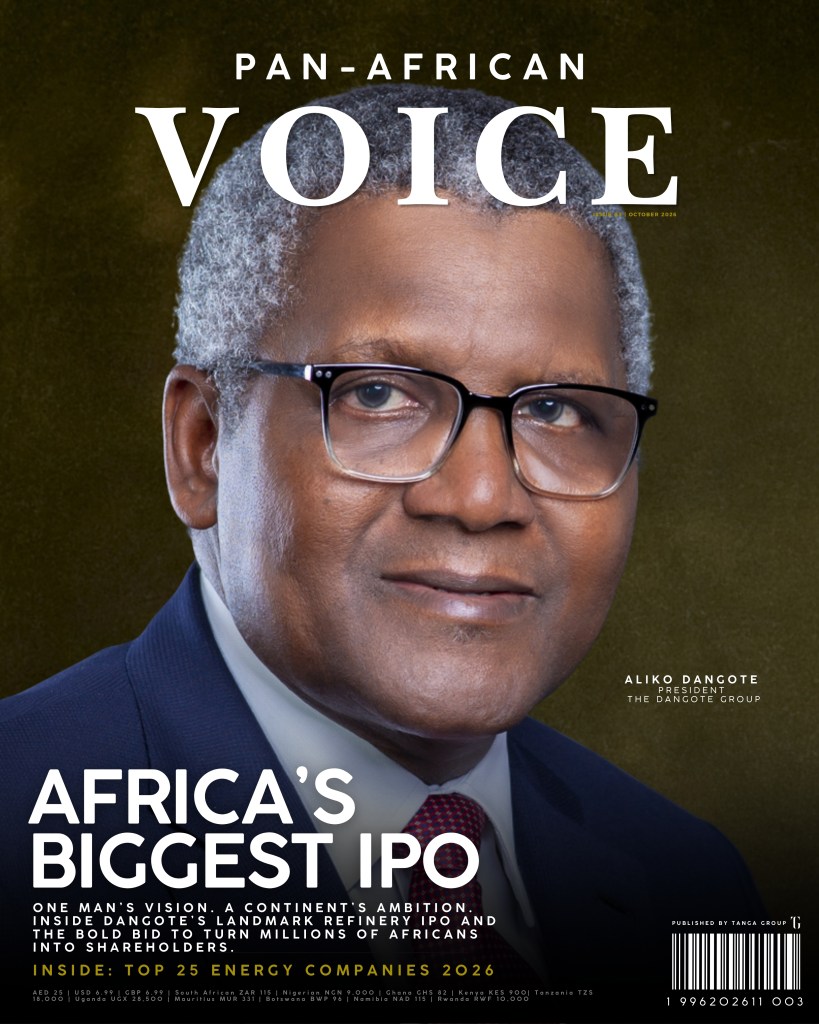
One man’s vision. A continent’s ambition. Inside Dangote’s landmark refinery IPO and the bold bid to turn millions of Africans into shareholders.
Within thirty minutes of the order book opening on 14 September 2026, Bamboo, one of Nigeria’s best known investment apps, buckled under ten times its normal traffic. Other platforms strained too. The rush had a single cause. For the first time, ordinary Africans could buy a piece of the Dangote Petroleum Refinery, the 650,000 barrel per day giant on the Lekki coastline that Aliko Dangote spent more than a decade willing into existence.
The offer is the most ambitious public share sale the continent has attempted. It is also the clearest statement yet of the idea that has defined Dangote’s career: that Africa should process what it produces, and that Africans should own what gets built.
The deal
Dangote Petroleum Refinery and Petrochemicals FZE is offering 4.1 billion ordinary shares at ₦525 each, a base raise of roughly ₦2.15 trillion, or about $1.63 billion. An upsize option, subject to regulatory approval, could lift proceeds to around $2.1 billion if demand runs ahead of supply. The shares will list on the Nigerian Exchange once allotment is complete, with trading expected late in 2026.
The entry ticket is deliberately small. A minimum of ten shares costs ₦5,250, roughly four dollars. Retail investors who hold their shares for the periods set out in the prospectus may receive up to two bonus shares free. The shares are denominated in dollars, and at the launch in Lagos Dangote told investors they would receive their dividends in dollars too, a powerful promise in a market that has lived through repeated naira devaluations.
The offer was due to close on 13 October. On 12 October, the Securities and Exchange Commission approved a two week extension to 27 October, which the company said would let investors across more African markets finish opening accounts and clearing identity checks. Chief executive David Bird, who calls the sale the “people’s IPO”, said the extra time would widen participation across the continent. The refinery is also working on depositary receipt programmes so investors can buy in across borders, and Botswana is exploring receipts on its Gaborone exchange. The public offer follows a $2.5 billion private placement in July 2026, priced at $0.35 a share and reportedly 3.7 times oversubscribed, with the Africa Finance Corporation among the participants. Proceeds from the IPO are earmarked for a roughly $14 billion expansion that would double capacity to 1.4 million barrels per day by the end of the decade, along with new storage and distribution infrastructure.
The scale is without precedent at home. Safaricom’s 2008 offering in Nairobi, which raised about $800 million and drew hundreds of thousands of first time investors, long stood as the benchmark for a homegrown African listing. Dangote’s base offer is roughly double that, before any upsize.
From cement to crude
To understand why this listing matters, start with the paradox it was built to end. For decades Nigeria, Africa’s largest oil producer, shipped its crude abroad and bought back refined petrol, diesel and jet fuel at world prices. Its four state refineries in Port Harcourt, Warri and Kaduna spent long stretches idle or running far below capacity, while fuel subsidies drained the treasury and queues at filling stations became a fixture of national life.
Dangote had already built one industrial answer to that pattern. Starting as a commodities trader in Kano in the late 1970s, he moved into manufacturing and turned cement, once a largely imported product in Nigeria, into a homegrown industry. Dangote Cement listed on the Nigerian Exchange in 2010 and grew into one of the most valuable companies on the bourse, with plants across the continent.
The refinery was the far larger bet. When he announced it in 2013, the estimated cost was about $9 billion and the target start date 2016. The project moved to Lekki, swallowed years of dredging, piling and construction, and the bill climbed past $19 billion. The refinery was commissioned in May 2023, began producing diesel and aviation fuel in January 2024, delivered its first petrol in September 2024 and reached full refining capacity in February 2026.
The journey was not smooth. The refinery fought for steady supplies of Nigerian crude and imported cargoes from the United States, Brazil and Angola to keep running. It clashed with regulators and fuel importers, and Dangote at one point offered to sell the plant to the state oil company NNPC amid accusations of monopoly. Yet the economics have turned. The company reported an after tax profit of about $1.82 billion for the first half of 2026, against a loss of $476 million for all of 2025, and it now exports fuel to West African neighbours and beyond, including jet fuel into Europe.
Ten million owners – Dangote does not need the money in the way most issuers do. He will keep more than 80 per cent of the refinery after listing, and the expansion has, by the company’s account, already been engineered and funded. What he wants is breadth. His stated target is ten million shareholders drawn from Nigeria and across Africa.
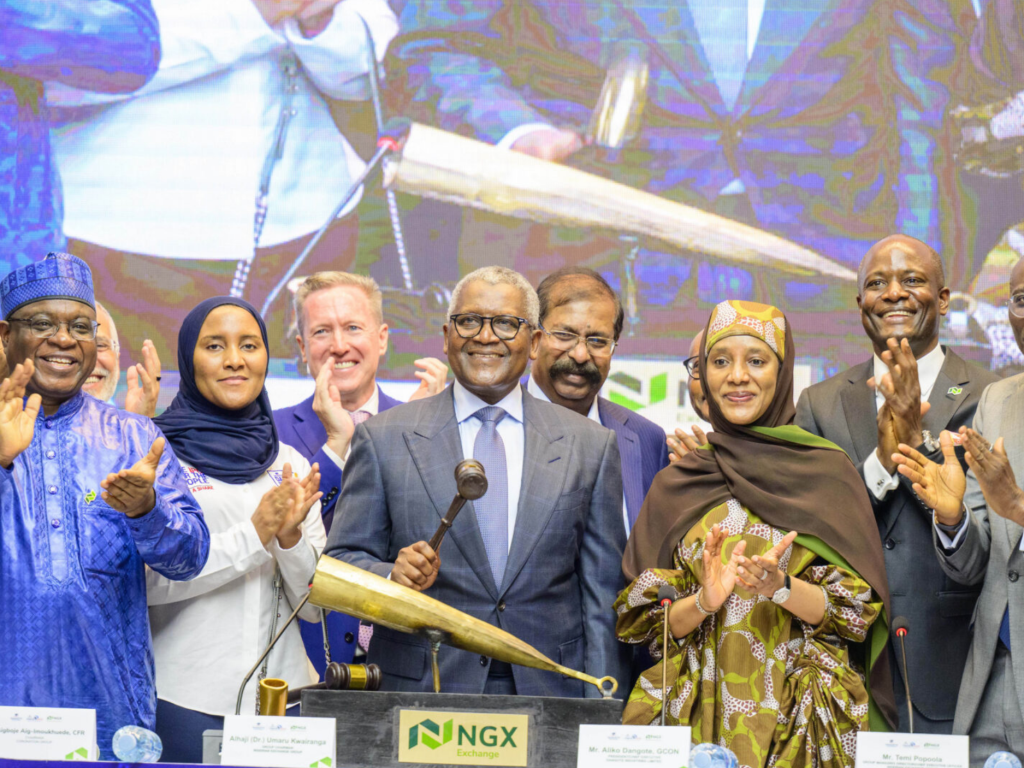
That number is audacious. According to Jude Chiemeka, chief executive of the Nigerian Exchange, only about 2.7 million Nigerians actively invest in stocks in a country of more than 240 million people. Hitting the target would give one company nearly four times the active investor base of the entire national market.
Dangote frames the offer as a shift in the relationship between Africans and the infrastructure they depend on. Speaking in Lagos in September, he argued that every Nigerian already uses products that depend on refined petroleum, from the trader moving goods to the farmer taking produce to market. What makes this IPO different, he said, is that it lets people stop being only consumers. “Through the IPO, Nigerians can now have a direct stake in the value being created,” he said.
His ambitions run beyond Nigeria’s borders. “We want every human being living on the continent to be part of this action,” he told investors at the launch. The offer, in his words, is designed to give ordinary Nigerians and Africans an opportunity to own a stake in the refinery, and he has called it an “IPO for the people.”
The listing sits inside a wider plan. Dangote has brought forward the listing of his fertiliser business, a cornerstone of the group’s agricultural play, and has broken ground on a $16 billion refinery in East Africa that he intends to list on the Nairobi Securities Exchange. Together they sketch a model in which African industrial assets are financed, at least in part, by African savers.
Reading the numbers
The investment case rests on scale and scarcity. Dangote operates the largest refinery in Africa, supplies most of Nigeria’s petrol and earns hard currency from exports. Its swing from a 2025 loss to a strong first half profit in 2026, helped by supply disruptions linked to conflict involving Iran that lifted demand for its aviation fuel, shows how quickly the asset can generate cash.
The caveats are real, and seasoned investors are weighing them. The IPO price sits above the July placement, and Bloomberg’s estimate of a valuation near $49 billion implies a sizeable premium to the roughly $40 billion that the placement price suggested. Because the free float is a small slice of the company, trading after listing may be thin. The issuer is a free zone company rather than a standard Nigerian company, which shapes how shareholder rights and dollar dividends work in practice, and the dollar dividend promise awaits final regulatory sign off.
There are operating and political risks too. Domestic crude supply still falls short of what the refinery needs, leaving it exposed to shipping costs and currency swings. Its dominance of the petrol market draws accusations of excessive control, which Dangote rejects. And Nigeria heads into elections in 2027, with inflation near 16 per cent as recently as June 2026.
What it means for Africa
The significance reaches beyond one company’s share register. If Dangote attracts even a fraction of his ten million target, he will have shown that African retail savings can be mobilised at scale for productive assets, a challenge that has long kept the continent’s capital markets shallow. Fintech platforms, banks and brokers have built new digital rails for the offer, and the planned depositary receipts point to a future in which a saver in Gaborone or Nairobi can own a Lagos listed asset as easily as a local one.
For this issue’s themes of energy, agriculture and mining, the message is direct. Africa’s resource wealth has historically been extracted, exported and financed elsewhere. The Dangote refinery is a working argument for local beneficiation, and the IPO extends that argument from the factory gate to the balance sheet. Success would hand governments and other industrialists a template; a disappointing debut would hand sceptics an easy story.
The vision on trial
Dangote has spent his career betting that Africa can make what it uses. Cement proved the point at the scale of a building site; the refinery proved it at the scale of a nation’s fuel supply. The IPO asks a harder question: whether Africans will back that vision with their own savings, in their own markets.
The answer arrives in stages. The offer now closes on 27 October, allotment and refunds follow, and the shares are expected to start trading on the Nigerian Exchange before the year ends. How many people subscribe, how many come from beyond Nigeria and how the stock behaves in its first months will tell the continent whether its biggest IPO was a single remarkable event or the start of a new era of African ownership.
Discover more from Pan-African Voice
Subscribe to get the latest posts sent to your email.