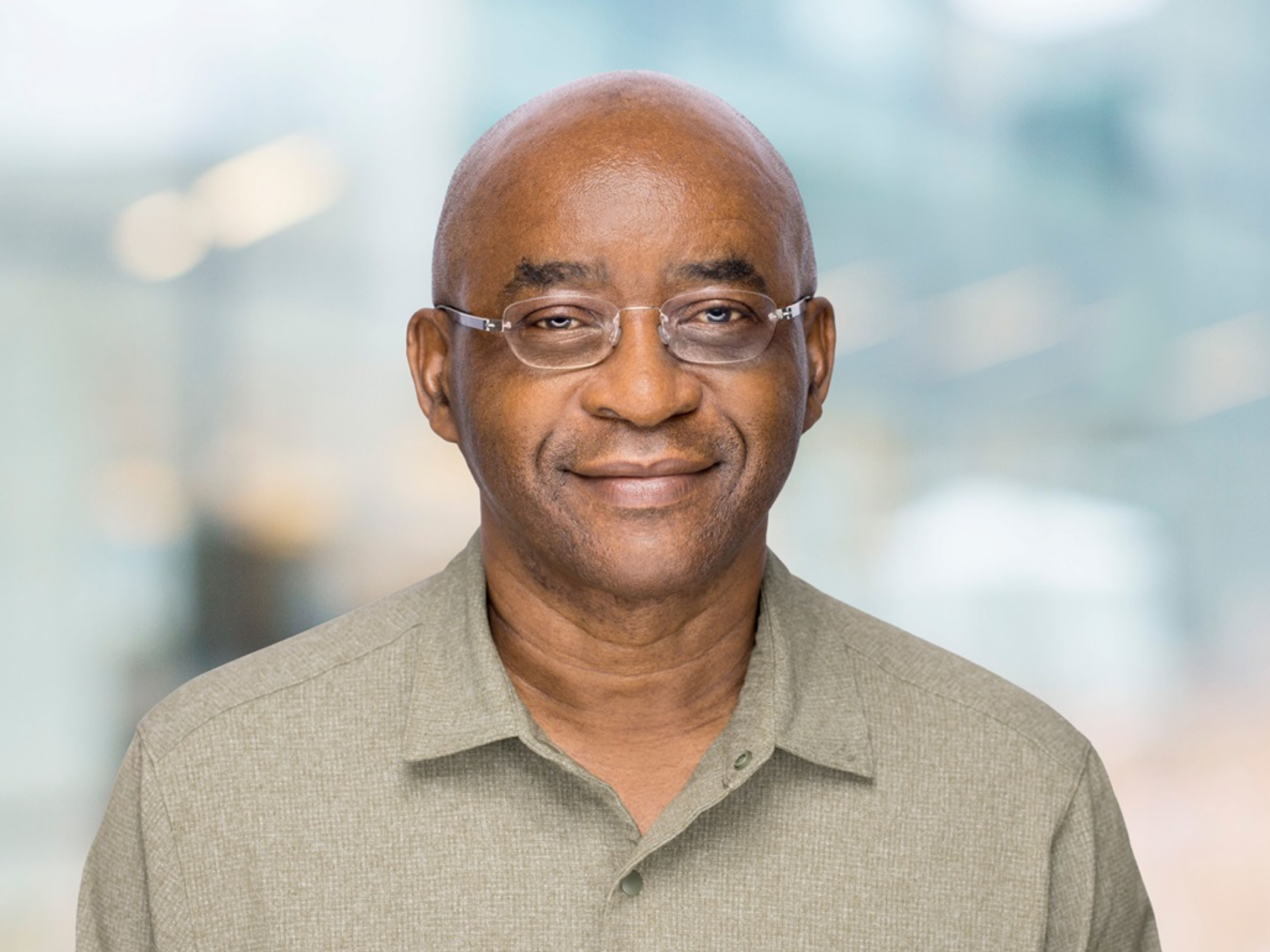
Name: Strive Masiyiwa
Role: Founder and Executive Chairman
Company: Econet Group and Cassava Technologies
Industry: Telecommunications, digital infrastructure and technology
Company size: More than 100,000 kilometres of fibre infrastructure, supported by data centres, cloud, cyber security, financial technology and digital services
Years in company: 33 years, since founding Econet in 1993
Strive Masiyiwa: The Engineer Who Built His Own Road to Market
Strive Masiyiwa did not enter an open telecommunications market. He helped create one.
That distinction explains both the character of his career and the strategic discipline behind the businesses he subsequently built. Many entrepreneurs compete by offering a better product, lowering prices or moving faster than established companies. Masiyiwa first had to secure the legal right to operate.
Born in Zimbabwe in 1961, Masiyiwa studied electrical engineering at the University of Wales before returning to Africa. After working for Zimbabwe’s state telecommunications company, he established Retrofit Engineering in 1986. The business initially concentrated on electrical contracting, but Masiyiwa soon recognised the commercial potential of mobile communications.
The obstacle was not technology. It was the structure of the market.
Zimbabwe’s telecommunications industry was controlled by the state, and private participation was restricted. When Masiyiwa sought a licence to establish a mobile network, his application was rejected. What followed was a legal confrontation that lasted approximately five years.
The struggle was more complicated than a single courtroom victory. Masiyiwa lost important early decisions, faced significant financial pressure and had to refine the constitutional basis of his case. His argument was ultimately connected to freedom of expression and the right to communicate. The eventual ruling opened the market to private participation, allowing Econet Wireless Zimbabwe to begin commercial operations in 1998. Stanford Graduate School of Business describes the battle as a defining moment in Africa’s telecommunications revolution.
The achievement was not simply the creation of another mobile operator. Econet demonstrated that an African entrepreneur could challenge an entrenched monopoly, survive institutional resistance and build a company in a sector dominated by governments and multinational corporations.
From Mobile Calls to Digital Infrastructure
Masiyiwa’s most important strategic decision may have been refusing to define Econet as a mobile telephone company.
Mobile connectivity was the entry point. The larger opportunity was the infrastructure required to support Africa’s digital economy.
Over time, businesses connected to the Econet ecosystem expanded into fibre networks, data centres, cloud computing, cyber security, financial technology, digital payments and enterprise services. Cassava Technologies now brings many of these capabilities together. Its infrastructure includes more than 100,000 kilometres of fibre, giving the group a position beneath the applications and platforms used by consumers and businesses. Cassava Technologies presents itself as an integrated technology company serving the infrastructure, connectivity and digital needs of African markets.
This matters because Africa’s technology story is often told through consumer applications. Yet those applications depend on less visible assets: fibre routes, data storage, reliable power, secure networks and affordable computing capacity.
Masiyiwa has increasingly concentrated on this underlying layer.
Cassava’s planned artificial intelligence infrastructure illustrates that strategy. The company is introducing computing capacity powered by NVIDIA technology, beginning in South Africa and expanding to markets including Egypt, Kenya, Morocco and Nigeria. The objective is to give African businesses, researchers and governments access to advanced computing resources without depending entirely on infrastructure located outside the continent. Cassava’s official announcement positions the initiative as part of a wider effort to strengthen Africa’s artificial intelligence capability and data sovereignty.
The commercial opportunity is considerable. So are the risks.
Data centres and artificial intelligence infrastructure require large amounts of capital, reliable electricity and sustained customer demand. Operators must manage foreign currency exposure, equipment costs, debt, competition from global cloud providers and the possibility of building capacity before the market is ready to use it.
Masiyiwa’s response has been to combine ambition with institutional financing. Cassava raised approximately $310 million in 2024 as part of a wider reorganisation. In 2026, Liquid Intelligent Technologies completed financing of approximately $660 million, including an oversubscribed $300 million bond. These transactions demonstrate access to international capital, but they also underline the financial discipline required to operate infrastructure businesses at scale.
Building Markets Around Exclusion
A consistent feature of Masiyiwa’s career is his ability to view exclusion as market information.
When telephone access was scarce, Econet saw demand. When conventional banking excluded millions of people, the wider group invested in digital financial services. When African companies depended on international networks and overseas data centres, Cassava invested in fibre, cloud services and local computing capacity.
This approach does not romanticise underserved markets. It recognises that scarcity can reveal both commercial opportunity and institutional failure.
Masiyiwa has also used his position beyond business. He served as an African Union special envoy during the COVID pandemic, working on vaccine acquisition for African countries. He has participated in international boards and policy initiatives involving public health, technology and development.
Together with his wife, Tsitsi Masiyiwa, he founded Higherlife Foundation in 1996. The organisation reports that it has supported more than 400,000 learners, trained approximately 65,000 teachers and extended digital learning resources to millions of students. Higherlife Foundation reflects the couple’s view that entrepreneurship, education and institution building should reinforce one another.
The philanthropic work is not separate from Masiyiwa’s business philosophy. Both are based on expanding access to systems that influence opportunity.
His career also carries an important warning. Founder led businesses must eventually become institutions capable of surviving beyond the personality of their creator. As Econet and Cassava move into increasingly capital intensive markets, governance, succession, operational discipline and transparent accountability will become as important as entrepreneurial courage.
Masiyiwa’s legacy will therefore be measured by more than the companies he founded. It will be measured by whether those companies continue building African digital capacity through changing technologies, economic cycles and leadership transitions.
Key Lessons
- Understand the system before challenging it. Masiyiwa’s legal struggle required constitutional reasoning, patience and a clear understanding of how state power operated.
- Build beneath the visible market. Consumer technology receives attention, but fibre, computing, payments and data infrastructure often capture deeper and more durable value.
- Treat exclusion as commercial intelligence. Populations ignored by established institutions may represent substantial demand when products are designed around their circumstances.
- Finance ambition with discipline. Infrastructure expansion requires patient capital, careful debt management and realistic expectations about utilisation.
- Build institutions that can outlast the founder. Entrepreneurial vision creates momentum, but governance, talent and succession determine whether that momentum becomes a permanent African institution.
Discover more from Pan-African Voice
Subscribe to get the latest posts sent to your email.