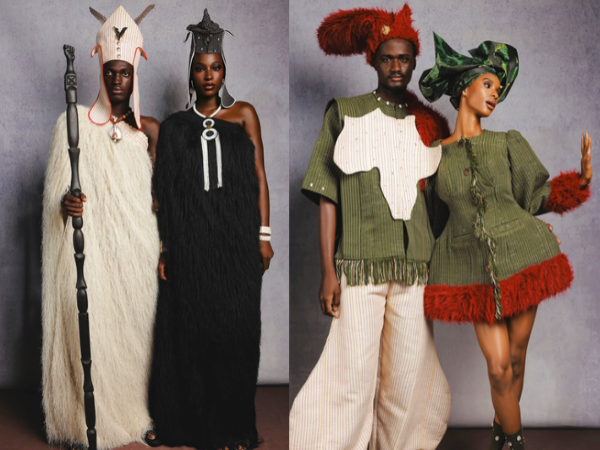
Lagos Fashion Week 2026, the platform’s 16th edition, gave as much attention to balance sheets, financing and retail terms as it did to the runway, a sign of how seriously Africa’s leading fashion platform now treats the business of style.
LAGOS, Nigeria. Lagos Fashion Week 2026 closed on 1 November with offsite presentations across the city, ending a programme that began on 28 October under the theme “CRAFTED: Heritage. Innovation. Circular Futures.” More than 50 designers showed in the tents at the Federal Palace Hotel on Victoria Island over three days of runway shows.
The collections drew the attention. The more consequential story sat in the rooms around them, where financiers, retailers, lawyers and founders debated how African labels raise capital, protect their intellectual property and turn demand into durable revenue.
Omoyemi Akerele, the Founder Behind Lagos Fashion Week
Behind the week stands Omoyemi Akerele, a former lawyer who moved into fashion as an editor and consultant before founding Style House Files, the creative development agency that launched Lagos Fashion Week in 2011. Fifteen years on, the platform presents fashion as an engine for jobs, entrepreneurship and economic growth, not simply a spectacle.
Her approach has been to build infrastructure around designers rather than only stage shows. Lagos Fashion Week runs business development programmes, showrooms and buyer pathways alongside sustainability initiatives such as Green Access and Woven Threads. In 2025 that work won the platform a £1 million Earthshot Prize in the Build a Waste Free World category. “Fashion has the power to create jobs, preserve culture, and transform lives,” Akerele has said.
The commercial side of her work was recognised during this year’s edition. Brandon Hudspeth, the US Consul General in Lagos, presented her with the Excellence in Commercial and Creative Leadership Award for building links between Nigerian designers and the American market. “For 15 years, Omoyemi has built one of Africa’s premier fashion showcases,” he said.
The Money Behind Lagos Fashion Week 2026
The sponsor roster reads like a cross section of Nigerian commerce. Heineken served as title sponsor, with NIVEA, MTN, the Bank of Industry, Lord’s Gin, Molped, the Nigerian Exchange Group, Africa Finance Corporation and Lush Hair among the key partners. The presence of two development financiers and the country’s stock exchange group alongside consumer brands is telling.
Africa Finance Corporation (AFC), which first partnered with the week in 2025, returned as lead sponsor of the financing convening, “Off the Runway: Financing a Sustainable African Fashion Industry in a Changing Climate”, held with AFC Capital Partners. Moderated by Yinka Adegoke, the session brought in voices from the International Finance Corporation and AFC Capital Partners on access to investment, capacity building, and regulatory and intellectual property frameworks. “Africa’s creative industries embody both our cultural pride and our economic promise,” said Samaila Zubairu, President and Chief Executive of AFC.
From Runway to Revenue: How LFW Designers Reach Buyers
The Fashion Business Series made the commercial agenda explicit from the first day. One session put a blunt question in its title, “Beyond the Runway: Are You Making Money or Just Making Sales?”, as Akindele Phillips, founder and managing partner of We Practice Africa, urged brands to keep accurate financial records and build growth beyond social media. Another, “Capital That Fits”, examined the funding available to creative businesses and the documentation lenders expect.
Retail readiness dominated the final day. Olamoniso Nduka, head of commercial at Polo Avenue, the luxury retailer that links international brands with African labels in Nigeria and Dubai, set out what stockists require: standardised line sheets, production that can scale and clearly defined wholesale margins. Dye Lab founder Rukky Ladoja advised brands to prioritise customer data and measurable returns.
Collaborations offered proof of concept. Emmy Kasbit, the first recipient of the platform’s Fashion Focus Fund, partnered with luxury retailer Alára on “Akwete Reimagined”, a capsule that reinterprets traditional Akwete weaving. Ghana’s Christie Brown returned to the runway after eight years, and labels from Uganda and Angola joined the schedule, extending the week’s commercial reach beyond Nigeria.
The route to America is a central part of the pitch. According to Arise News, designers have been introduced to US buyers through trade shows including Coterie and NYNOW in New York and Liberty Fairs in Miami, while Moda Operandi gives participating designers access to American shoppers. The prize is substantial: American consumers spent an estimated US$560 billion on clothing and footwear in 2025, according to the US Bureau of Economic Analysis.
The model appears to be delivering. Exit surveys from the 2025 edition, cited by BusinessDay, found that 68 per cent of attending brands secured new financing or distribution agreements.
The Size of Africa’s Fashion Opportunity
The numbers explain why financiers are paying attention. UNESCO’s 2023 study of the African fashion sector puts the continent’s annual textile, clothing and footwear exports at US$15.5 billion.
Africa still buys more than it sells. The same report estimates the continent’s trade deficit in those sectors at roughly US$7.6 billion, even though 37 of its 54 countries grow cotton, a crop that supports more than 3.5 million farmers.
Demand is building at home. UNESCO valued the clothing and footwear market south of the Sahara at US$31 billion in 2020 and expects it to keep growing each year, while the report found that online shopping penetration more than doubled, from 13 per cent in 2017 to 28 per cent in 2021.
What Still Holds African Labels Back
The week did not shy away from the obstacles. The opening panel, “Crafted: By Whom, For Whom and at What Cost?”, pressed for fairer and longer term relationships with the craftspeople behind African fashion. Aisha Ayensu, founder and creative director of Ghana’s Christie Brown, stressed that artisans are central to the region’s fashion businesses, a point echoed by Dr Christine Checinska, senior curator of Africa and Diaspora Textiles and Fashion at the V&A.
Intellectual property was a recurring concern. Sessions examined how designers can protect and commercialise their work, the limits of local manufacturing and the contracts that safeguard creative ownership, issues that become urgent the moment a label signs with a retailer or a manufacturer.
The supply chain itself is the larger prize. At the 2025 edition, AFC’s Banji Feyitola presented analysis suggesting that local supply chains running from cotton to catwalk could capture 50 per cent more value by 2030, according to BusinessDay. Building them will take the patient capital and industrial infrastructure that this year’s financing sessions were designed to unlock.
Why Lagos Fashion Week 2026 Matters
For investors and executives, the message from Lagos Fashion Week 2026 is that African fashion is being organised as an industry. The platform has assembled what many emerging fashion economies lack: a route from design to finance, retail and export, backed by development lenders, a stock exchange group and major consumer brands.
The gaps remain real. Production capacity, financial discipline and access to patient capital will decide how many labels on this year’s runway become durable businesses. Yet with retailers such as Polo Avenue connecting African labels to shoppers in Dubai, and American buyers reaching designers through Lagos, the week now works as a marketplace as much as a showcase. Sixteen editions in, that may be Akerele’s most important design.
Discover more from Pan-African Voice
Subscribe to get the latest posts sent to your email.